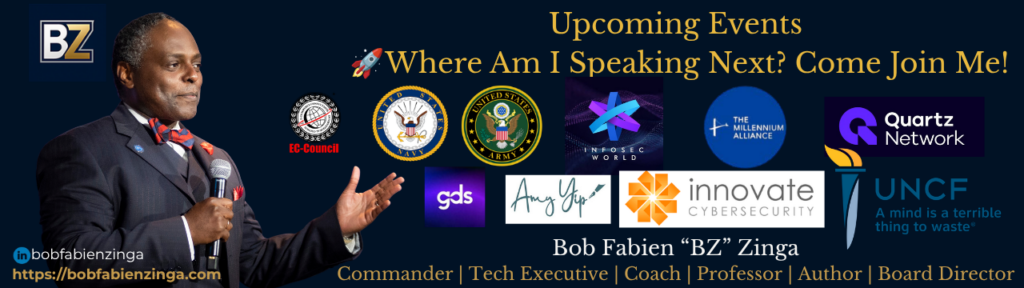
Here are my last few presentations:
1. Cybersecurity Is a Leadership Problem, Not Just a Technical One
Abstract:
Cybersecurity failures rarely stem from technology alone—they emerge from leadership gaps, misaligned incentives, and poor decision-making under uncertainty. This seminar reframes cybersecurity as a leadership and governance challenge, helping executives understand their role in shaping secure outcomes.
Outline:
- Why most cyber incidents are leadership failures
- Translating cyber risk into business and mission impact
- Case studies: when governance mattered more than tools
- The shared responsibility model: executives, engineers, and users
- Practical takeaways for leaders and practitioners
2. AI, Automation, and Cyber Risk: What Leaders Must Understand Now
Abstract:
As AI and automation reshape workflows, they introduce new classes of cyber risk—from data integrity and model abuse to governance gaps. This session provides a clear introduction to AI-enabled cyber risk and the steps leaders must take to adopt AI responsibly and securely.
Outline:
- How AI changes the cybersecurity threat landscape
- Risks unique to data, models, and automation pipelines
- AI governance: ownership, accountability, and ethics
- Practical guardrails for secure AI adoption
- Future preparations for professionals and students
3. From Compliance to Resilience: Building Security That Actually Works
Abstract:
Compliance alone does not equal security. This session explores how organizations move beyond checkbox compliance toward true cyber resilience—balancing regulatory requirements with real-world preparedness, incident response, and recovery.
Outline:
- Why compliance often fails to prevent incidents
- Understanding resilience vs. prevention
- Incident response and decision-making under pressure
- Measuring what matters: security metrics leaders can trust
- Career implications for future technology leaders
4. Leadership in Emerging Technologies: Leading Through Complexity, Not Just Technology
Abstract:
Emerging technologies like AI, automation, and blockchain are transforming every industry—but technology alone does not drive success. Leadership does. This session explores how leaders move beyond technical adoption to strategic impact—aligning innovation with mission outcomes, navigating risk, and building resilient, ethical, and high-performing organizations in an era of constant disruption.
Outline:
- Why technology initiatives fail without strong leadership
- Understanding emerging technologies and their real business impact
- Leading through automation, data, and digital transformation
- Managing risk: cybersecurity, ethics, and workforce disruption
- Building a culture of innovation, trust, and adaptability
- Developing future-ready leaders: skills, mindset, and continuous learning
- Career implications for the next generation of technology and cybersecurity leaders
5. From Reactive to Resilient: Transforming Security Operations for Modern Threats
Abstract:
Modern cyber threats are faster, more complex, and increasingly AI-driven—overwhelming traditional reactive security models. This session explores how organizations shift from detection and response to true cyber resilience—designing systems that anticipate attacks, absorb impact, and recover rapidly. Leaders will learn how to transform security operations by integrating automation, threat intelligence, and cross-functional collaboration to ensure mission continuity in the face of inevitable breaches.
Outline:
- Why reactive security fails in today’s threat landscape
- Understanding resilience: anticipate, withstand, and recover
- Designing for “assume breach” and survivability
- Building a resilient SOC: automation, AI, and proactive defense
- Integrating threat intelligence with business continuity
- Leadership’s role in driving cultural and operational change
- Career implications for future cybersecurity and technology leaders
Key Message:
Cybersecurity is no longer about preventing every breach—it is about building organizations, leaders, and teams that can anticipate disruption, adapt under pressure, and accomplish the mission regardless of the attack.
6. Fearless Leadership in a Digital Age
Abstract:
In a world defined by rapid technological change, AI disruption, and evolving cyber threats, leadership—not technology—is the ultimate differentiator. This session explores how CIOs and CISOs must evolve from operators to fearless business leaders who drive strategy, resilience, and innovation. Drawing from military command and Silicon Valley experience, it reframes cybersecurity and technology leadership as a discipline of courage, clarity, and decisive action under uncertainty.
Outline:
- Why technical expertise alone is no longer enough for today’s leaders
- From operator to strategic leader: aligning technology with business outcomes
- Leading with courage in uncertainty: risk, decision-making, and accountability
- From protection to resilience: designing systems that survive disruption
- Breaking the myth: enabling both speed and security simultaneously
- Leveraging AI as a force multiplier for human leadership—not a replacement
- Building diverse, high-performing teams and breaking organizational silos
- What it means to be a fearless leader in the digital age
7. Cybersecurity: The Adversary Point of View
Abstract:
Cybersecurity is often approached defensively—but attackers don’t think defensively. They think creatively, opportunistically, and relentlessly. This keynote challenges leaders to shift their mindset from protecting systems to thinking like the adversary. Drawing on real-world breaches, attack timelines, and military cyber operations, the session reframes security as a discipline of anticipation, resilience, and continuous adaptation. Leaders will learn how to design systems that assume compromise, respond decisively, and ultimately survive and recover in a contested digital environment.
Outline:
- Why most cyber incidents stem from predictable human and system failures (misconfigurations, weak controls)
- Thinking like the adversary: “Adversary = Me” mindset shift
- Understanding the attacker lifecycle: from reconnaissance to action
- The reality of breaches: speed, scale, and impact of modern attacks
- Assume breach: designing systems to take a hit and still survive
- Detect, respond, and recover: what happens after compromise
- Case study lessons: missed signals, delayed response, and attacker dwell time
- Protecting what matters most: prioritizing high-risk data (PII, financial, medical)
- Building cyber resilience: from prevention to survivability and recovery
8. Cybersecurity Threat Landscape: Emerging Risks and Mitigation Strategies
Abstract:
The cybersecurity threat landscape is evolving faster than most organizations can adapt. AI-enabled attacks, identity-based breaches, and supply chain vulnerabilities are reshaping how adversaries operate. This session explores the most critical emerging risks and how leaders can shift from reactive defense to proactive resilience—aligning cybersecurity strategies with real-world business and mission impact.
Outline:
- The modern threat landscape: why traditional defenses are no longer enough
- Emerging risks: AI-driven attacks, identity compromise, and supply chain exposure
- The adversary advantage: speed, scale, and asymmetry in cyber warfare
- From prevention to resilience: adopting an “assume breach” mindset
- Mitigation strategies that work: Zero Trust, AI-enabled defense, and security by design
- Translating cyber risk into business impact and executive decision-making
9. Becoming a Cybersecurity Professional: From Learning to Leading in a High-Stakes Digital World
Abstract:
Cybersecurity is more than a career path—it is a mission-critical profession at the intersection of technology, business, and national security. This session provides a practical roadmap for aspiring professionals to enter, grow, and lead in cybersecurity, focusing on the skills, experiences, and mindset required to succeed in a rapidly evolving threat landscape.
Outline:
- Why cybersecurity is one of the most critical and in-demand careers today
- Education vs. experience: what actually prepares you for success
- Technical, analytical, and soft skills that differentiate top professionals
- Building your network, reputation, and real-world experience
- Navigating the job market and accelerating career growth
10. Leadership in Cybersecurity: Influence, Introspection, and Impact in a High-Stakes Domain
Abstract:
Cybersecurity is not just a technical discipline—it is a leadership challenge rooted in influence, trust, and decision-making under pressure. This session explores how effective leaders in cybersecurity develop self-awareness, build resilient teams, and prioritize what truly matters in an increasingly complex and resource-constrained environment. Attendees will gain practical insights into leading themselves first, leading others with purpose, and navigating the realities of modern cybersecurity operations.
Outline:
- Leadership is influence: why cybersecurity success starts with people, not tools
- Leading yourself first: introspection, core values, and overcoming limiting beliefs
- Building trust through authenticity, vulnerability, and emotional intelligence
- The reality of cybersecurity: burnout, talent gaps, and operating under pressure
- Prioritization that drives impact: focusing on what matters (80/20, delegation, execution)
11. The Law of Priorities: Doing What Matters Most as a Leader
Abstract:
Leaders are often overwhelmed with activity—but activity does not equal accomplishment. This session explores how leaders apply the Law of Priorities to focus on what truly drives results. By leveraging principles like the 80/20 rule, the Eisenhower Matrix, and disciplined delegation, leaders can eliminate distractions, maximize impact, and achieve exponential outcomes in both mission and business environments.
Outline:
- Why activity does not equal accomplishment—and how leaders get it wrong
- Identifying your MVPs: focusing on the most valuable priorities
- Applying the 80/20 principle to maximize impact and leverage
- Using the Eisenhower Matrix to prioritize what truly matters
- Stop, delegate, or schedule: making disciplined leadership decisions
- From busyness to effectiveness: creating exponential results through focus
- Surrounding yourself with the right people to multiply impact
12. Password Security: The First Line of Defense in a Breach-Driven World
Abstract:
Passwords remain the most widely used—and most exploited—form of authentication. Despite decades of awareness, users continue to choose weak, reused, and predictable passwords, making them the easiest entry point for attackers. This session exposes the real risks behind poor password practices, demonstrates how quickly credentials can be compromised, and provides practical, modern strategies—such as password managers and multi-factor authentication—to significantly strengthen personal and organizational security.
Outline:
- Why passwords continue to be the weakest link in cybersecurity
- The reality of password breaches: weak, reused, and predictable credentials
- How attackers actually break passwords: brute force, reuse, and human behavior
- Time to crack: why length and complexity matter more than ever
- Common mistakes: sharing passwords, writing them down, and using simple PINs
- Building strong passwords: length, complexity, and uniqueness across accounts
- Modern defenses: password managers, encryption, and secure storage
- Beyond passwords: multi-factor authentication, biometrics, and layered security
- Human factor security: awareness, skepticism, and behavior change
13. From Awareness to Action: Building a Human Firewall That Actually Works
Abstract:
Cybersecurity awareness training often becomes a checkbox exercise—but real security depends on human behavior. This session reframes awareness as a leadership and culture challenge, showing how organizations can move beyond compliance-driven training to build a workforce that actively detects, prevents, and responds to threats. In an era of AI-driven attacks and social engineering, the strongest defense is an informed, empowered, and accountable workforce.
Outline:
- Why traditional awareness training fails to change behavior
- The rise of human-centric threats: phishing, social engineering, and AI-driven attacks
- Building a “human firewall”: key behaviors every employee must master
- Leadership’s role in shaping a security-first culture
- Measuring what matters: from training completion to behavior change
- From annual training to continuous learning and real-time vigilance
- Career implications: why cybersecurity awareness is a leadership skill, not just a technical one
14. Top Security Threats for 2026: What Every Security Leader Needs to Know — A Leadership Perspective on AI-Speed Cyber Risk, Resilience, and Business Survival
Abstract:
The cybersecurity landscape in 2026 is evolving at machine speed. Security leaders now face AI-enabled attacks, identity-centric intrusions, ransomware campaigns targeting operational continuity, supply-chain compromises, cloud governance failures, and increasingly sophisticated insider threats. This session provides an executive-level perspective on the most significant cyber risks shaping 2026 and the leadership strategies required to navigate them. Drawing from military cyber operations and Silicon Valley security leadership, the presentation explores how organizations must move beyond reactive defense toward operational resilience, governance, and business-aligned security leadership.
Outline:
- Why cyber threats are accelerating faster than traditional defenses
- AI-enabled attacks: deepfakes, autonomous exploitation, and synthetic identities
- Identity as the new perimeter: credential attacks, MFA fatigue, and privilege abuse
- Supply-chain and third-party risk in hyperconnected ecosystems
- Ransomware evolution: from data theft to operational disruption
- Cloud, AI, and data governance failures as emerging board-level risks
- Insider threats, human risk, and the impact of burnout and automation
- How Zero Trust, resilience, and governance must evolve in 2026
- Leadership lessons from military cyber operations and executive incident response
- Practical strategies security leaders can implement immediately
15. AI-Powered Threats: Operating at Machine Speed
Abstract:
Artificial intelligence has fundamentally altered the cyber battlefield. Threat actors are now using AI to accelerate reconnaissance, automate phishing campaigns, generate malware variants, and compress the time between vulnerability discovery and exploitation. This session examines how AI is reshaping offensive cyber capabilities and what defenders must do to adapt before “zero-day” becomes “zero-hour.”
Outline:
- How AI is accelerating cyberattack velocity
- AI-generated phishing, social engineering, and executive impersonation
- Autonomous vulnerability discovery and exploitation
- The rise of AI-enhanced ransomware operations
- Deepfakes and synthetic identity fraud
- Why traditional SOC workflows are struggling to keep pace
- Defensive uses of AI: opportunities and limitations
- Governance challenges surrounding AI adoption
- Building resilience against AI-enabled attacks
- Leadership priorities for AI-era cybersecurity
16. Identity Is the New Battlefield
Abstract:
In 2026, attackers increasingly bypass traditional perimeter defenses by targeting identities, sessions, credentials, and access relationships. This session explores why identity has become the primary attack surface and how organizations must rethink authentication, authorization, and trust in an era of distributed workforces, SaaS sprawl, and AI-enabled attacks.
Outline:
- Why identity attacks dominate modern breach investigations
- Credential theft, token hijacking, and session abuse
- MFA fatigue and phishing-resistant authentication
- Privileged access as a high-value target
- SaaS identity sprawl and shadow access risks
- Identity Threat Detection & Response (ITDR)
- Continuous authentication and behavioral analytics
- Zero Trust identity principles
- Executive accountability for identity governance
- Practical identity security priorities for 2026
17. From Prevention to Resilience: The New Cybersecurity Mandate
Abstract:
Modern organizations must accept that breaches, disruptions, and cyber crises are inevitable. The organizations that thrive in 2026 will not necessarily be the ones that prevent every attack—they will be the ones that recover fastest and maintain operational trust. This session reframes cybersecurity around resilience, crisis leadership, and organizational adaptability.
Outline:
- Why prevention-only strategies are failing
- Operational resilience as a competitive advantage
- Ransomware and business continuity realities
- Crisis leadership during cyber incidents
- Executive decision-making under pressure
- Tabletop exercises and cyber readiness
- Communication strategies during major incidents
- Aligning cybersecurity with business resilience goals
- Lessons learned from real-world cyber crises
- Building organizations that can adapt through disruption
18. Security Leadership in 2026: Governance, Trust, and Accountability
Abstract:
Cybersecurity leadership has evolved far beyond technical oversight. Today’s security leaders must navigate governance, regulatory complexity, AI ethics, geopolitical instability, and enterprise-wide risk management while maintaining trust across the organization. This session focuses on the leadership competencies required to succeed as a modern CISO or security executive in 2026.
Outline:
- Why cybersecurity is now a boardroom issue
- The evolving role of the modern CISO
- Translating cyber risk into business language
- AI governance and executive accountability
- Regulatory pressure and compliance expansion
- Balancing innovation with security controls
- Building security culture across the enterprise
- Leading through uncertainty and disruption
- The importance of emotional intelligence in security leadership
- Developing the next generation of cyber leaders
19. A Veteran CISO’s Perspective: 20 Years of Cyber Threat Evolution — From Perimeter Defense to AI-Driven Warfare
Abstract:
Over the past two decades, cybersecurity has evolved from opportunistic malware outbreaks and basic phishing campaigns into a persistent battlespace shaped by organized cybercrime, nation-state operations, supply-chain compromise, and AI-driven threats. This seminar provides a veteran CISO’s frontline perspective on how adversaries, defensive strategies, and security leadership responsibilities have transformed under increasing operational pressure. Drawing from experience across military command, higher education, and Silicon Valley, the session explores how modern CISOs must lead through uncertainty, accelerate decision-making, and shift from prevention-focused security models to resilience-based operating strategies. Attendees will gain practical insights into the evolution of cyber risk, the expanding role of the CISO as a business and mission leader, and the emerging realities of AI-enabled cyber warfare.
Outline:
- The four major inflection points that transformed cybersecurity over the last 20 years
- How cyber threats evolved from isolated attacks to continuous operational warfare
- Lessons learned from major incidents including ransomware and supply-chain compromises
- The shift from perimeter defense to Zero Trust Architecture and resilience engineering
- Why cybersecurity is now a board-level business and mission risk issue
- The evolution of the CISO role from technical operator to strategic executive advisor
- Five hard truths every modern security leader must confront
- Preparing organizations for AI-driven attacks, critical infrastructure threats, and accelerated exploit timelines
- Practical strategies to improve speed, visibility, resilience, and executive alignment in cybersecurity programs
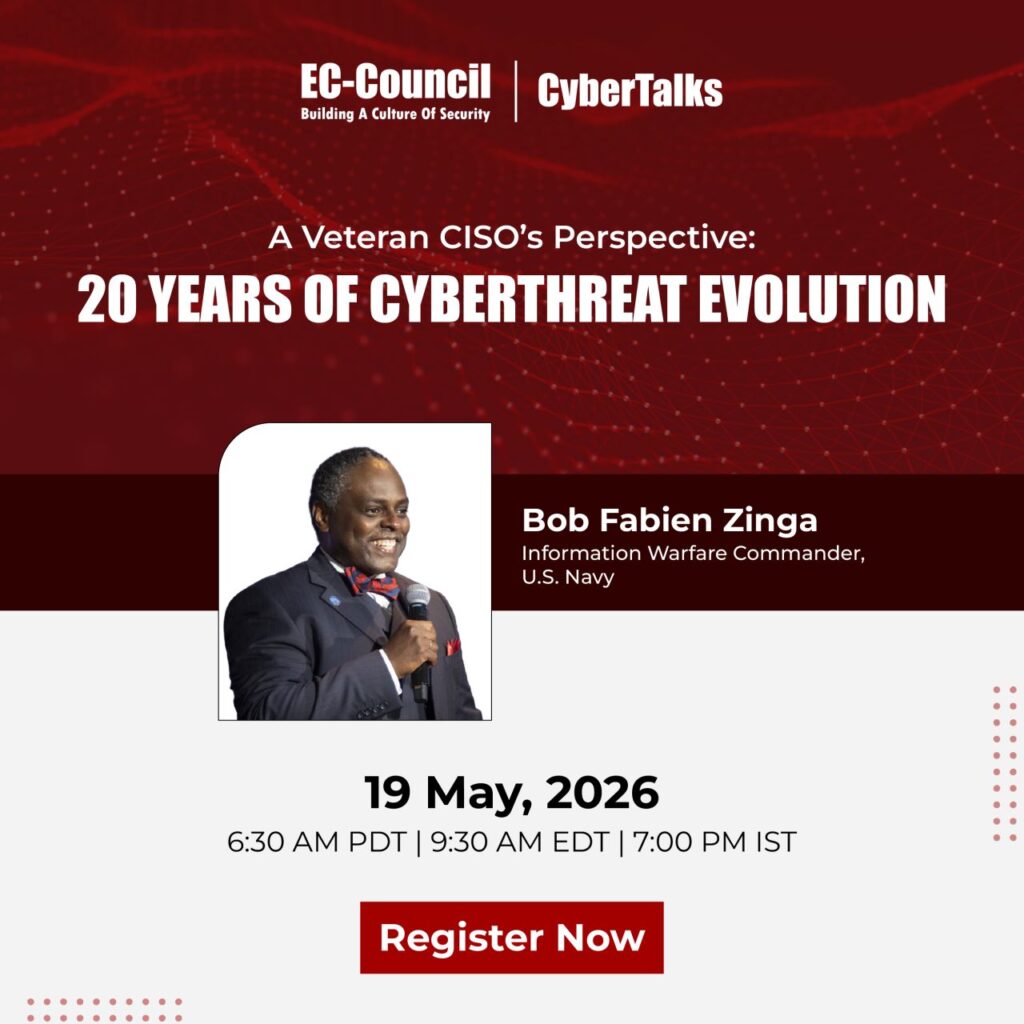
Presentation Promo: https://www.linkedin.com/posts/bobfabienzinga_cciso-ciso-riskmanagement-share-7459469162168586240-pYmN/
View Presentation: https://www.linkedin.com/posts/bobfabienzinga_a-veteran-cisos-perspective-20-years-of-share-7472631320867889152-eafQ/
20. Managing AI Risk: Governance and Security Strategies from a CISO’s Desk — Securing Intelligent Systems in the Age of Autonomous AI
Abstract:
Artificial Intelligence is rapidly transforming cybersecurity, robotics, enterprise operations, and decision-making at a scale few organizations are fully prepared to govern. As AI systems become more autonomous, interconnected, and embedded into critical business and operational environments, organizations face a new class of risks including model manipulation, AI-enabled cyberattacks, deepfakes, data poisoning, governance failures, and loss of human oversight. This seminar provides a modern CISO’s executive perspective on how organizations can responsibly innovate while managing the expanding risks introduced by AI adoption. Drawing from experience across military cyber operations, higher education, and Silicon Valley technology leadership, the session explores how security leaders must evolve from traditional defenders into strategic advisors capable of balancing innovation, governance, resilience, ethics, and operational trust in an era increasingly defined by intelligent automation and machine-speed decision-making. Attendees will gain practical insights into securing AI systems, building scalable governance frameworks, preparing for AI-enabled threats, and leading organizations through the uncertainty of the autonomous future.
Outline:
- Why AI is accelerating organizational risk faster than traditional governance models can adapt
- The evolution of AI-enabled threats: deepfakes, autonomous attacks, synthetic identities, and adversarial AI
- Lessons learned from cybersecurity, automation, and emerging technology failures across modern enterprises
- The expanding AI attack surface: data, models, APIs, robotics, and autonomous systems
- Why governance, accountability, and ethics are becoming critical business and mission requirements
- The evolution of the CISO role from cybersecurity operator to AI risk and resilience strategist
- Five hard truths every leader must confront about AI adoption, trust, and operational risk
- Preparing organizations for machine-speed attacks, AI-enabled decision-making, and cyber-physical disruption
- Practical strategies to improve AI governance, visibility, resilience, and executive alignment across the enterprise
- Building resilient organizations capable of innovating securely in the age of intelligent systems
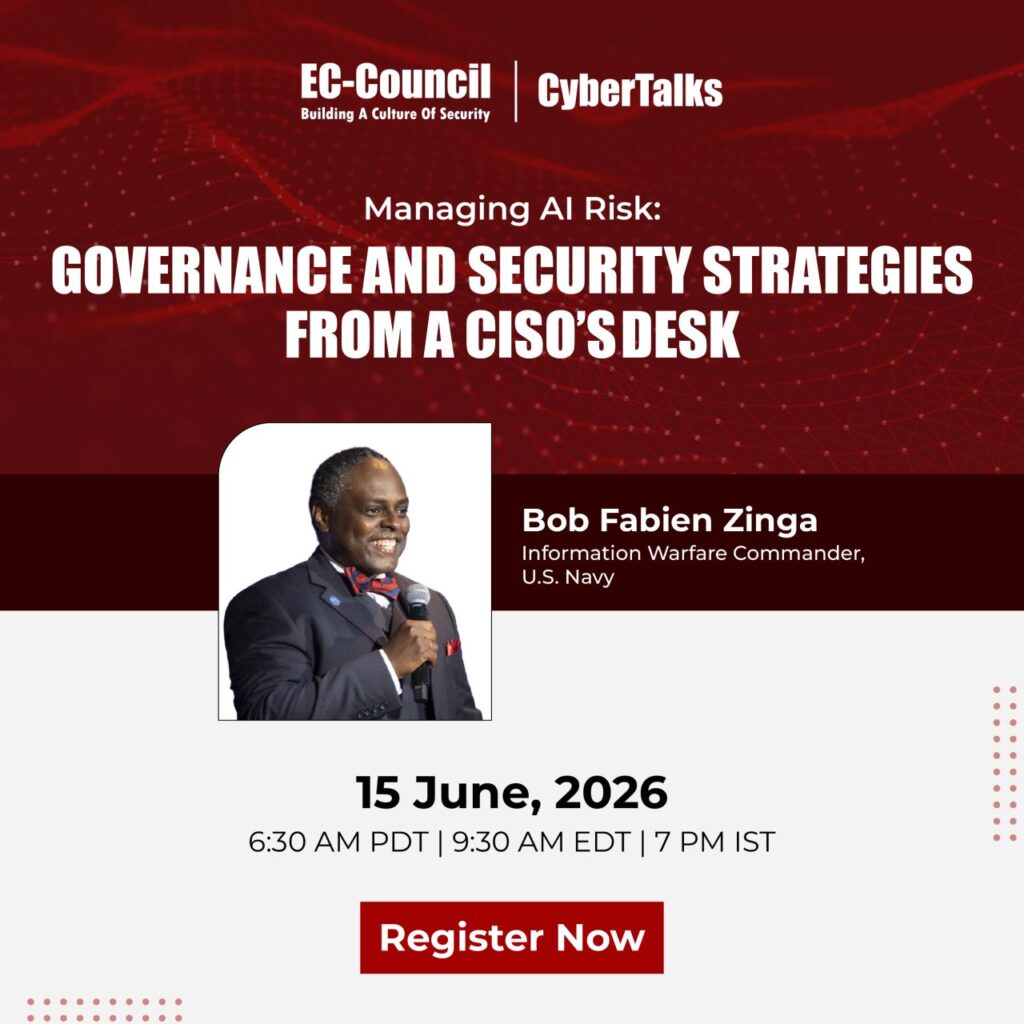
Presentation Promo: https://www.linkedin.com/posts/bobfabienzinga_cciso-eccouncil-airisk-share-7466494832006438913-rJXu/
22. The Evolution of APTs: What Security Leaders Must Prepare for Now
Abstract:
Advanced Persistent Threats (APTs) have evolved from isolated espionage campaigns targeting governments and defense organizations into sophisticated, continuous operations capable of disrupting businesses, critical infrastructure, and global supply chains. Today’s adversaries combine nation-state resources, cybercriminal tactics, cloud exploitation, identity compromise, and artificial intelligence to achieve strategic objectives while remaining difficult to detect. This seminar provides a cybersecurity executive and military commander’s perspective on how APTs have transformed over the past two decades and what security leaders must do to stay ahead. Drawing from experience across military operations, higher education, and Silicon Valley, the session explores the shift from perimeter-focused security to intelligence-driven defense, operational resilience, and continuous threat management. Attendees will gain practical insights into modern adversary behavior, emerging AI-enabled threats, and the leadership strategies required to protect organizations in an era of persistent cyber conflict.
Outline:
- The major inflection points that transformed Advanced Persistent Threats over the last 20 years
- How APTs evolved from cyber espionage to continuous strategic operations
- The convergence of nation-state actors, cybercriminal organizations, and cyber mercenaries
- Lessons learned from major APT campaigns, supply-chain compromises, and critical infrastructure attacks
- Why identity, cloud platforms, and third-party ecosystems have become primary targets
- The shift from prevention-focused security to threat-informed defense and resilience engineering
- Five hard truths every security leader must understand about modern adversaries
- Preparing organizations for AI-enabled attacks, automated reconnaissance, and accelerated exploitation
- Practical strategies to improve threat visibility, organizational resilience, executive alignment, and incident response readiness
- Building a security program designed to withstand persistent adversaries rather than prevent every attack
Key Message:
The question is no longer whether an organization will be targeted by advanced adversaries—it is whether leaders can build the resilience, speed, and decision-making capabilities necessary to operate successfully in an environment of continuous cyber conflict.
23. Command, Control, and Credibility: Leading Cybersecurity When the Stakes Turn Real
Abstract:
Today’s cyber incidents unfold at machine speed while executive decisions are still made by people. As organizations accelerate AI adoption and expand digital operations, cybersecurity leaders must navigate a rapidly evolving threat landscape while maintaining trust with boards, executives, regulators, customers, and employees.
This executive-focused discussion examines how effective leaders build resilience before a crisis, maintain command and control during an incident, and establish the credibility necessary to influence strategic decisions. Drawing on lessons from enterprise security programs, threat response operations, and military leadership, the session explores what separates organizations that successfully navigate cyber disruption from those that struggle to recover.
Outline:
- The new reality of AI-driven cyber risk
- What executives must know before the next major cyber incident
- Intelligence, automation, and decision advantage in cybersecurity
- Leading through uncertainty: maintaining command, control, and confidence
- Building credibility with boards, executives, and stakeholders
- The future of cyber leadership in an increasingly autonomous world
24. Beyond Compliance: Building Cyber Resilience Through Leadership
Abstract
Cybersecurity is no longer just a technology challenge—it is a leadership responsibility. While compliance frameworks establish important minimum standards, they do not guarantee an organization’s ability to prevent, withstand, or recover from today’s increasingly sophisticated cyber threats. The organizations that consistently outperform their peers are those that move beyond checklist compliance to build resilient cultures, effective governance, informed decision-making, and operational readiness.
Drawing upon experience as a cybersecurity executive, board advisor, and U.S. Navy Information Warfare Commander, this session explores how leaders can transform cybersecurity from a compliance exercise into a strategic business capability. Attendees will learn why resilience—not perfection—is the new measure of security success, how executives can better align cybersecurity with business objectives, and what practical steps organizations must take to strengthen governance, improve incident response, and foster a culture of shared accountability. In an era defined by AI, cloud transformation, supply chain risk, and persistent cyber threats, the strongest defense begins with leadership.
Outline
- Why compliance is necessary—but never sufficient—for effective cybersecurity
- The evolution from prevention-focused security to cyber resilience and organizational adaptability
- Why most major cyber incidents begin as leadership, governance, or decision-making failures
- Building a culture where cybersecurity becomes everyone’s responsibility—not just the security team’s
- Translating cyber risk into business outcomes executives and boards can understand
- Moving beyond technical metrics to measure organizational resilience, recovery, and business continuity
- Leadership during crisis: making high-consequence decisions with incomplete information
- Strengthening executive governance, board engagement, and cross-functional accountability
- Preparing organizations for AI-enabled threats, third-party risk, and rapidly evolving attack surfaces
- Practical strategies for building resilient security programs that protect mission, reputation, and long-term business value
Key Message
Cyber resilience is not achieved through compliance alone—it is built through leadership. Technology, frameworks, and regulations establish the foundation, but resilient organizations are created by leaders who cultivate trust, align security with business strategy, prepare for inevitable disruptions, and empower their people to make sound decisions under pressure. In today’s threat landscape, cybersecurity is no longer measured by whether attacks occur, but by how effectively an organization anticipates, adapts, responds, and recovers when they do. The future belongs to leaders who recognize that resilience is the true competitive advantage.
GDS Group Security Insight Summit: July 22, 2026 | Fireside Chat: Who Leads in an AI-Accelerated Threat Landscape?

25. How COOs, CIOs, and CTOs Can Uncover Hidden Operational Risks Before They Become Costly Business Disruptions
Abstract
Organizations are embracing AI, cloud computing, automation, and digital transformation to improve efficiency, accelerate innovation, and gain competitive advantage. Yet these same technologies are creating new operational dependencies that often remain invisible until a disruption exposes them. A cloud outage, AI governance failure, third-party compromise, identity service disruption, or untested business assumption can quickly escalate from a technical issue into a significant business crisis.
Drawing upon experience as a cybersecurity executive, board advisor, and U.S. Navy Information Warfare Commander, this executive session explores how leaders can proactively identify hidden operational risks before they become costly business disruptions. Rather than focusing solely on preventing failure, executives will learn how to build organizations capable of anticipating uncertainty, challenging assumptions, strengthening governance, and maintaining mission continuity during disruption. Attendees will gain practical strategies for integrating operational resilience into executive decision-making, AI governance, business continuity planning, and enterprise risk management—without slowing innovation or digital transformation. In an increasingly interconnected world, operational resilience has become one of the most important competitive advantages an organization can build.
Outline
- Why operational resilience has become a strategic leadership responsibility—not just an IT function
- How AI, cloud adoption, automation, and digital transformation create hidden operational dependencies
- The executive questions that uncover risks before they become business disruptions
- Identifying blind spots across people, processes, technology, AI governance, and third-party ecosystems
- Why governance failures—not technology failures—often cause the most expensive operational incidents
- Building executive visibility into Shadow AI, vendor risk, identity, and critical business dependencies
- Challenging assumptions through resilience planning, tabletop exercises, and scenario-based leadership
- Aligning business continuity, cyber resilience, and enterprise risk management into a unified strategy
- Measuring operational resilience through recovery capability, decision readiness, and organizational adaptability
- Practical leadership strategies for strengthening resilience while accelerating innovation and transformation
Key Message
Operational resilience is not achieved by eliminating every risk—it is built by leaders who recognize hidden dependencies before they become business disruptions. As organizations accelerate AI adoption, cloud transformation, and digital innovation, executive teams must move beyond reactive risk management toward proactive resilience. The most successful organizations ask better questions, challenge long-held assumptions, strengthen governance, and prepare their people to make effective decisions under uncertainty. In today’s interconnected business environment, competitive advantage belongs not to organizations that avoid disruption, but to those that continue accomplishing their mission despite it.
You can also find more of my work through my LinkedIn newsletters:
- LEAD (Daily Leadership Devotion): https://lnkd.in/g9NXhcPu (https://lnkd.in/g9NXhcPu)
- ETC (Cybersecurity Newsletter): https://lnkd.in/g64xvfmk (https://lnkd.in/g64xvfmk)
- AEE Speaker Profile: https://www.allamericanspeakers.com/speakers/464084/Bob-Fabien-Zinga